A hungry or thirsty visitor to your website is trying to make a fast decision: what's on, what it costs, and how to book a table. The best restaurant, cafe, and pub websites answer all three in seconds. The worst ones bury the menu in a slow PDF and make booking a phone-only affair. Here's what actually works.
What a hungry visitor wants, in order
- What's on the menu, and is there something for me?
- Roughly what will it cost?
- Where are you, and are you open now?
- Can I book a table without ringing?
Miss the first one and nothing else matters — most visitors leave a restaurant website within seconds if they can't quickly see the menu.
Stop using PDF-only menus
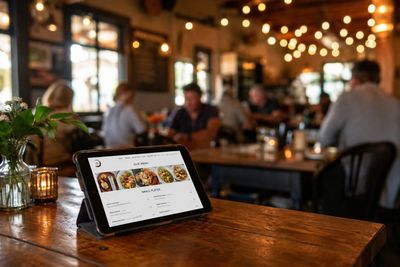
This is the single most common mistake on restaurant and pub websites. A PDF menu is slow to load on mobile, impossible for Google to properly index for search, and often unreadable on a small screen without pinching and zooming. Build your menu as an actual page on your website — readable, searchable, and easy to update when prices or dishes change. Keep a printable PDF version available too if you like, but don't make it the only option.
Make booking effortless
Whether you use a dedicated system like OpenTable, ResDiary, or SevenRooms, or a simpler booking form, the goal is the same: let people reserve a table without having to call during service when nobody has time to answer the phone. A visible "Book a Table" button, not a buried contact link, makes a real difference to how many people actually follow through.
The seasonal opportunity: Christmas bookings
For a huge number of restaurants, pubs, and cafes, the run-up to Christmas is the busiest and most profitable stretch of the year — office parties, family gatherings, and festive menus. Searches for "Christmas party venue near me" and "festive menu [town]" start climbing from September. If your festive menu and party booking information isn't live and easy to find well before then, you're losing bookings to venues that got there first. A dedicated "Christmas at [your venue]" page, updated each year, is one of the highest-converting pages a hospitality website can have.
Photography sells the experience
Food and atmosphere photography matters more here than almost any other type of business. Real photos of your actual dishes and your actual space — well-lit, appetising, and current — do more to convert a browsing visitor than any amount of descriptive text. Avoid generic stock photography of food that isn't yours; people notice, and it undermines trust.
Local SEO: getting found for "near me" searches
Most hospitality searches are hyper-local and often made on the move — someone standing on a high street searching "pub near me." To capture this:
- Keep your Google Business Profile fully updated — hours, menu, photos, and especially your Christmas trading hours
- Make sure your address, area, and town appear naturally in your website's content, not just the footer
- Encourage and respond to Google reviews — for hospitality, recent reviews influence decisions more than almost any other factor
See our local SEO guide for UK small businesses for the full picture.
Getting your site ready for the busy season
If your menu is stuck in a PDF, your booking process is phone-only, or you don't yet have a Christmas page live, now is the time to fix it — before the festive searches start. Get in touch if you'd like help building a site that actually brings bookings in.